If you are not an EU/EEA/Swiss citizen, studying in France means a long-stay student visa. The procedure is well-trodden and predictable; this guide gives you the sequence. The LIBS Concierge Desk then walks admitted students through each step for their specific country.
The sequence, in order
| Step | What happens |
|---|---|
| 1 · Admission | Everything starts with a written admission from the school. No admission, no visa file. |
| 2 · Campus France | In most countries, you file through the official “Études en France” platform managed with Campus France, which validates your academic project before the visa application. |
| 3 · Visa application | You apply for the long-stay student visa (the “VLS-TS”, a long-stay visa that serves as a residence permit) at the French consulate or visa centre for your country, with your admission, financial and housing elements. |
| 4 · Arrival & validation | After arriving in France, you validate your VLS-TS online within the required window — this makes it your residence permit for the year. |
The three things that actually decide timelines
Your country's queue — consulate and Campus France processing times vary widely by country and season. Your file's completeness — missing documents are the classic source of weeks lost. When you start — early files sail; last-minute files gamble. This is why LIBS runs four intakes a year: if a timeline slips, your admission moves to the next intake instead of dying.
Where LIBS fits in
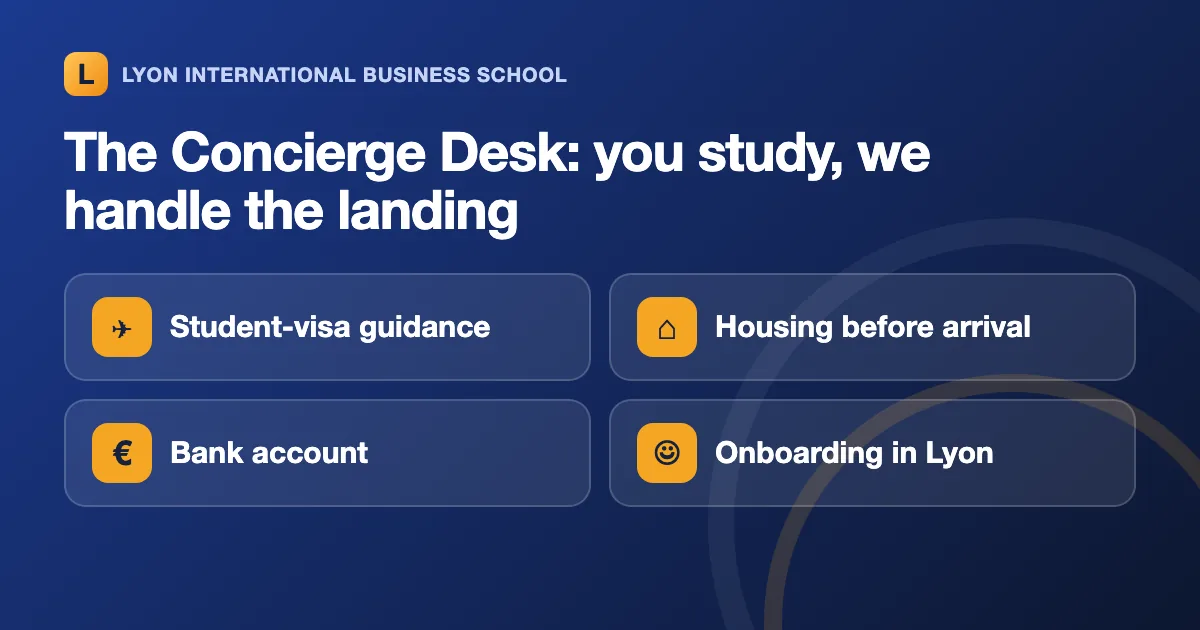
The Concierge Desk activates at admission: it tells you which route applies in your country, sequences your documents, sanity-checks the file before submission, and keeps the school-side paperwork instant. It cannot decide the visa — only the French authorities do — but it makes sure nothing on your side is the reason for a delay. Official information is always available from the French consulate in your country and the France-Visas and Campus France official sites; treat those as the authoritative sources for your case.
Frequently asked questions
I'm an EU citizen — do I need any of this?
No. EU/EEA/Swiss citizens need no visa or residence permit to study in France. You enrol and move.
I already have a residence permit in another European country — is it easier?
Often the logistics are simpler — see our dedicated page for students already in Europe. Your exact situation is reviewed at admission.
How early should I start?
Start the admission process as early as you can — months, not weeks, before your target intake, especially in high-season countries. Early files have options; late files have stress.
Does the school deal with the consulate for me?
No school can — the application is personal. LIBS prepares you so your file is complete and coherent, and answers every school-side request immediately.
Related guides
The Concierge Desk
Visa guidance, housing, bank, arrival — one contact.
Four intakes a year
The safety net when timelines slip.
Apply from abroad
The path from your country to Lyon.
Talk to a LIBS advisor
Tell us where you are and where you want to study — you'll get answers in writing.