The CEFR — Common European Framework of Reference — grades language ability from A1 to C2. It is the scale used across Europe, and the one LIBS uses for its positioning test and yearly assessments. Here is what each level means in a business classroom.
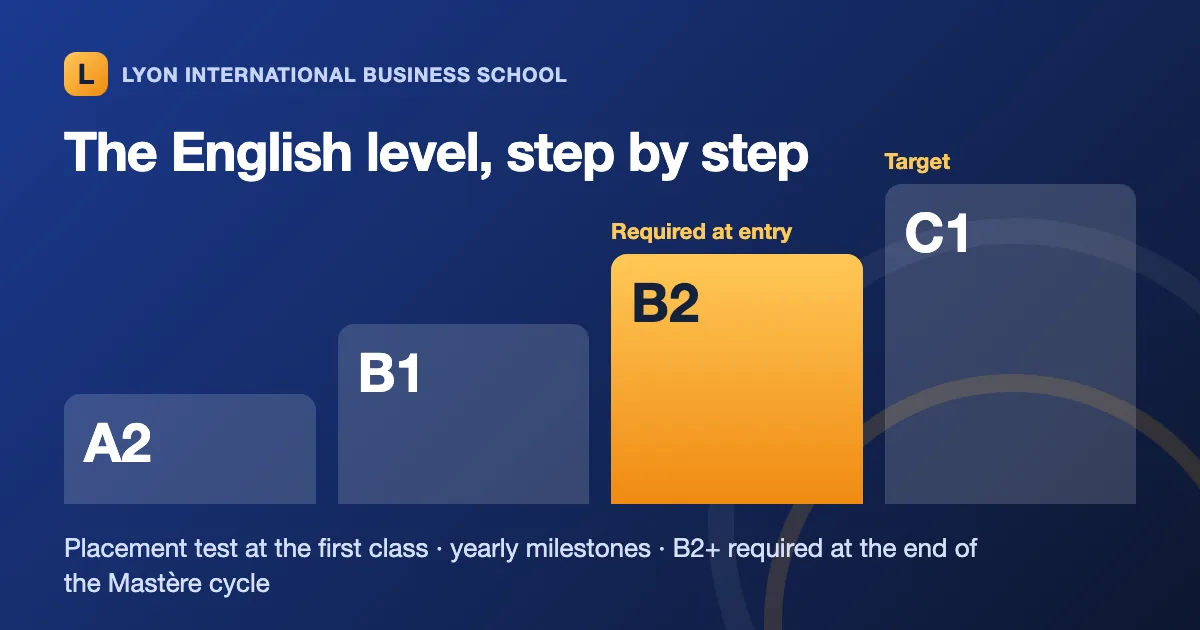

The scale, translated into student life
| Level | In class, it feels like… |
|---|---|
| A1-A2 | You follow slides better than speech; group work is hard. Right level to start building, not to start a degree. |
| B1 | You follow structured lectures and hold your own in familiar topics; fast debates still escape you. |
| B2 | The working level: lectures, case discussions, presentations and exams are demanding but doable. Most English-taught programs pitch here. |
| B2+/C1 | You argue, negotiate and present with nuance; accents and speed stop being obstacles. This is professional fluency — the level the market rewards. |
| C2 | Near-native mastery. Nobody requires it; nobody complains about it. |
How LIBS handles your level — honestly
Your real level is established by a CEFR positioning test at your first class — not by a box you tick on a form. From there, daily business-English practice and a yearly assessment track your progression against milestones that rise each year of the cycle, up to B2+ required at the end of the Mastère cycle under the study regulations, with C1 as the target. No vague “English-friendly” promises: a measured start, a measured path, a verified level at the end.
If your English isn't there yet
A positioning test that says A2 or B1 is information, not a verdict. The framework is built precisely to move a level per year with daily practice — and because the whole environment (courses, campus, cohort) runs in English, immersion compounds what the sessions build. State your situation when you apply; the answer, like all our admission answers, comes in writing.
Frequently asked questions
Do I need an official test certificate (IELTS/TOEFL) to apply?
State your situation in your application — requirements for your profile and intake are confirmed in writing. The LIBS positioning test at the first class establishes your working level regardless.
What level do French students typically start with?
It varies widely — which is exactly why the positioning test exists. The daily-practice framework then moves each student from their real level.
Is B2+ hard to reach?
From B2, with daily practice over the cycle's final years, B2+ is a realistic, measured step — and the framework provides a resit as of right for the end-of-cycle requirement.
Related guides
The business English framework
Daily practice, yearly assessment, rising milestones.
Why study in English?
The case for a 100% English-taught degree.
The programs
Bachelor and Mastère, 100% in English.
Talk to a LIBS advisor
Tell us where you are and where you want to study — you'll get answers in writing.